Public worship is first and foremost meeting with our covenant God.
In dating slang, at one time, people used to talk about having a “DTR.” This was shorthand for having a “Defining the Relationship” discussion with the purpose of clarifying expectations and the nature of the relationship.
In human romantic relationships, the ultimate DTR conversation is the marriage ceremony: “I take you to be my wedded wife, and I do promise and covenant before God and these witnesses to be your loving and faithful husband in sickness and in health, in plenty and in want, in joy and in sorrow, as long as we both shall live.” Yes, you are in a relationship with your spouse, but it is a defined one. It is a marriage relationship.
What we do when we gather for worship on Sunday could be called a “Divine DTR.” We are not just in a “relationship” with God, but in one which is defined by him. The word the Bible uses for this relationship is “Covenant.”
Public worship is first and foremost meeting with our covenant God.
As our denomination’s Directory for Public Worship puts it:
An assembly of public worship is not merely a gathering of God’s children with each other, but is, before all else, a meeting of the triune God with his covenant people. In the covenant, God promises his chosen ones that he will dwell among them as their God and they will be his people….
The triune God is present in public worship, not only by virtue of the divine omnipresence, but, much more intimately, as the faithful covenant Savior. Through Christ, God’s people have access by one Spirit to the Father.
In an assembly of public worship, the triune God is not only the One to whom worship is directed, but also the One who is active in the worship of the church. Through his public ordinances, the covenant God actively works to engage his people in communion with himself. In public worship, God communes with his people, and they with him, in a manner which expresses the close relationships of the Father and his redeemed children, of the Son and his beloved bride, and of the Holy Spirit and the living temple in which he dwells.
The triune God assembles his covenant people for public worship in order to manifest and renew their covenant bond with him and one another. The Holy Spirit engages them and draws them into the Father’s presence as a living sacrifice in Christ. God himself has fellowship with them, strengthening and guiding them for life in his presence and service in his kingdom.
Notice the language “renewing the covenant.” It is not as though the covenant is going to expire like your Netflix subscription—or worse, like one of those phone calls, “The warranty on your vehicle is about to expire.” No, “renewing the covenant” means that in worship on the Lord’s Day (Sunday), God promises to meet with his people and remind them of who he is, who we are, and what he has done for us in Jesus Christ. If someone were to say to you, “remember your wedding vows,” they are not simply telling you to think about the time you made those vows, but a call to remember that you are a married man or a married woman and renew your commitment to living that relationship. The best way to understand the call to “remember” is to think of its opposite—“Do not forget.”
Again as our Directory for Public Worship puts it:
Public worship should be conducted in a manner that reflects God’s initiative in the covenant itself, making clear that God establishes and renews his covenant with his people, assuring God’s people of those things which they so easily forget unless Christ crucified is portrayed before their eyes week after week, cultivating the expectation that God himself meets his people in Christ as the Holy Spirit works through the public ordinances, always keeping central the persons and works of the triune God.
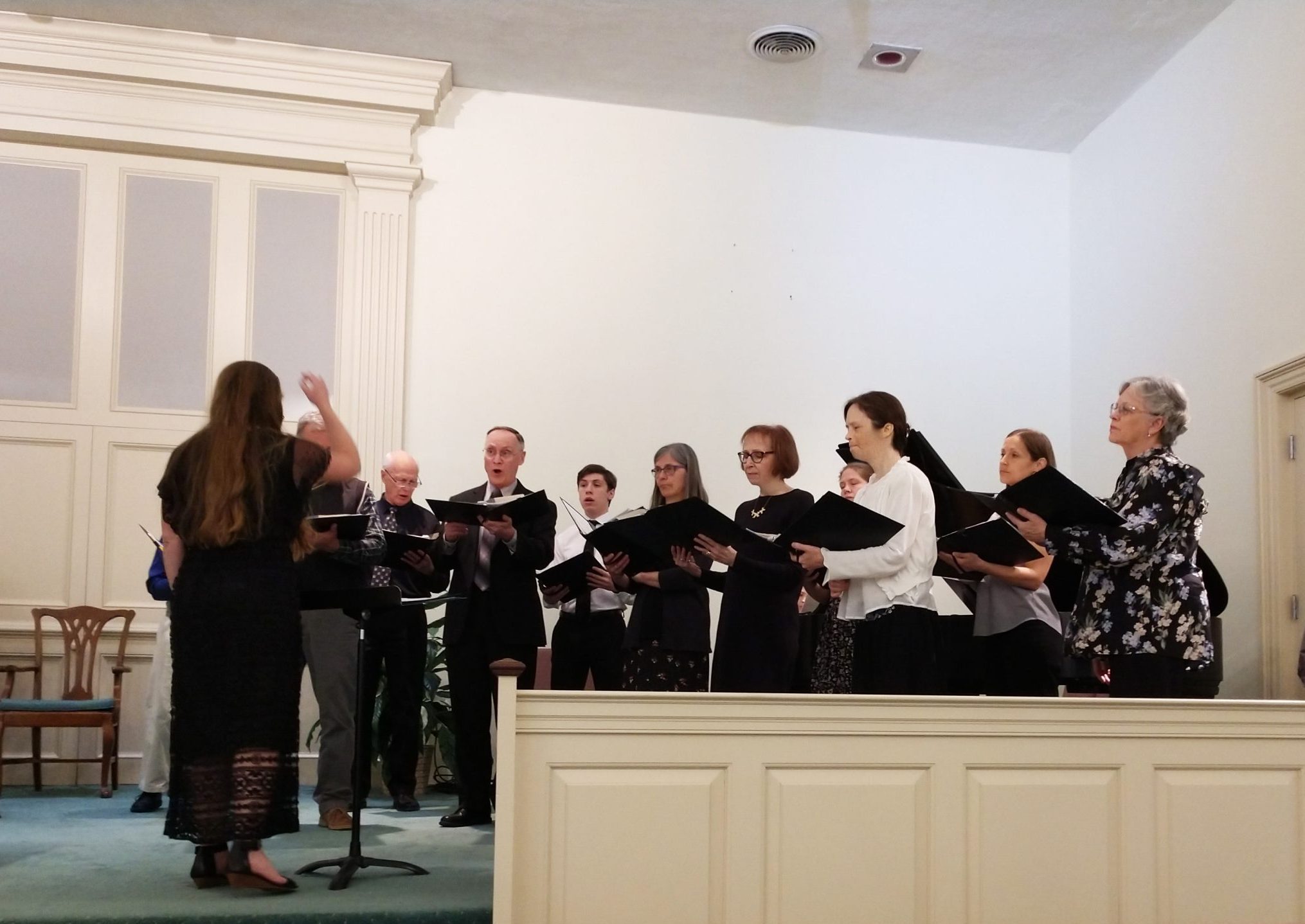
Consequently, it is well that public worship be so conducted that it is apparent that God summons his church to assemble in his presence, that he assures his people of his receiving and cleansing them through Christ the Mediator, that he consecrates them to himself and his service by his Word, that he communes with them and gives them grace to help in time of need through his means of grace, and that he sends them out to serve with his blessing.
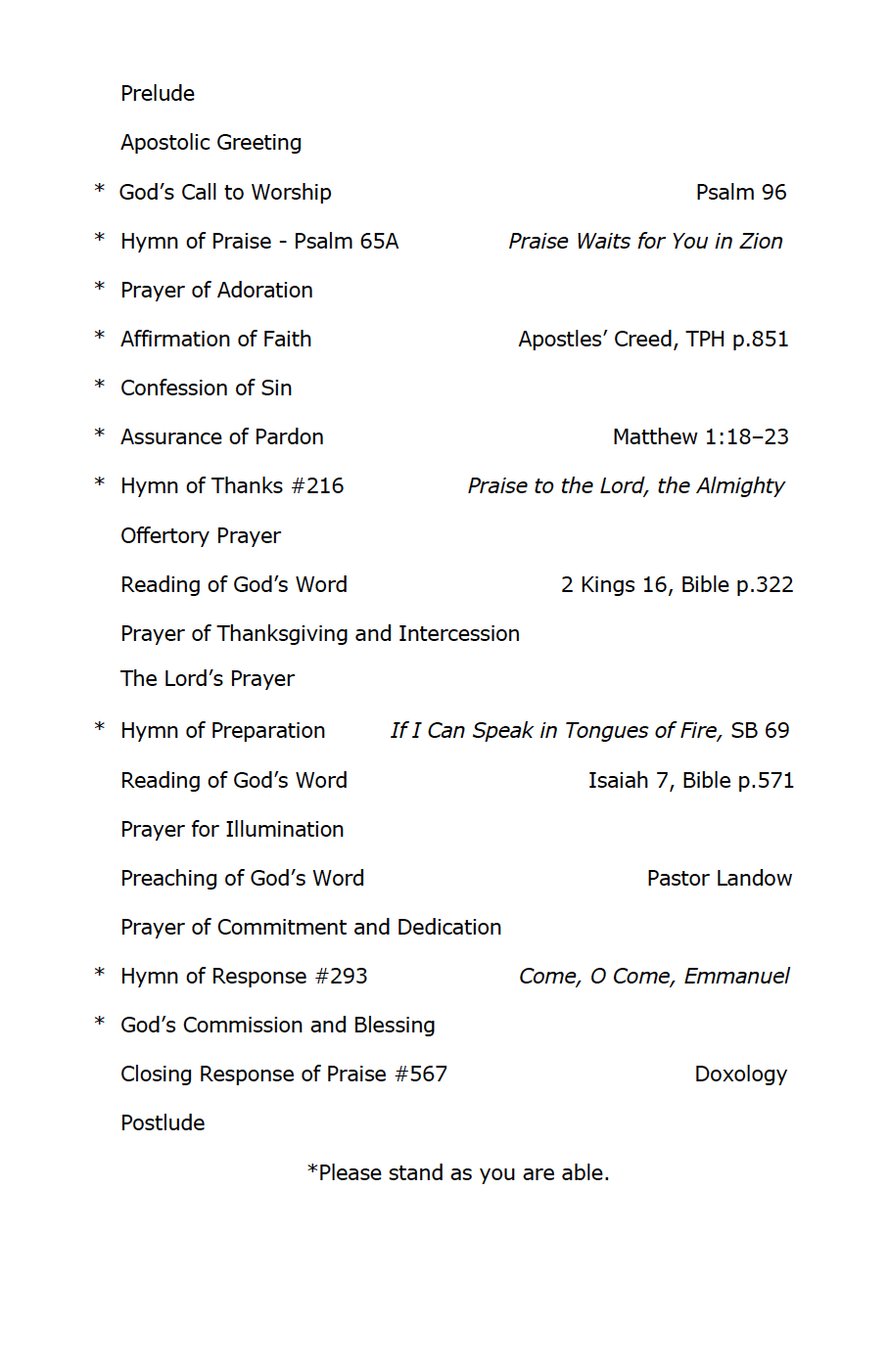
Included on this page is a sample of our normal Sunday morning Order of Service. As you look at it, I hope you will notice how our worship is a dialogue between God and his people where God speaks through his word read and preached, and we respond to the Lord’s word in confession, prayer, and song.
In addition to speaking to us through his word, he also communes with us in the sacrament of the Lord’s Supper, which we celebrate every week, alternating between morning and evening services.
We warmly invite you to come and worship with us at our morning and evening services. If you are already a Christian, we would love to have you join us as we meet with our covenant God. If you have wandered away from the God of the Bible or are seeking to know him, there is no better way to begin that journey than coming to the place where God has promised he will meet with all who seek him.
“Come, everyone who thirsts,
come to the waters;
and he who has no money,
come, buy and eat!
“Come, buy wine and milk
without money and without price.
Why do you spend your money for that which is not bread,
and your labor for that which does not satisfy?
Listen diligently to me, and eat what is good,
and delight yourselves in rich food….
Seek the LORD while he may be found;
call upon him while he is near”… (Isaiah 55:1–2, 6)